The Local Source for News and Information Since 1980
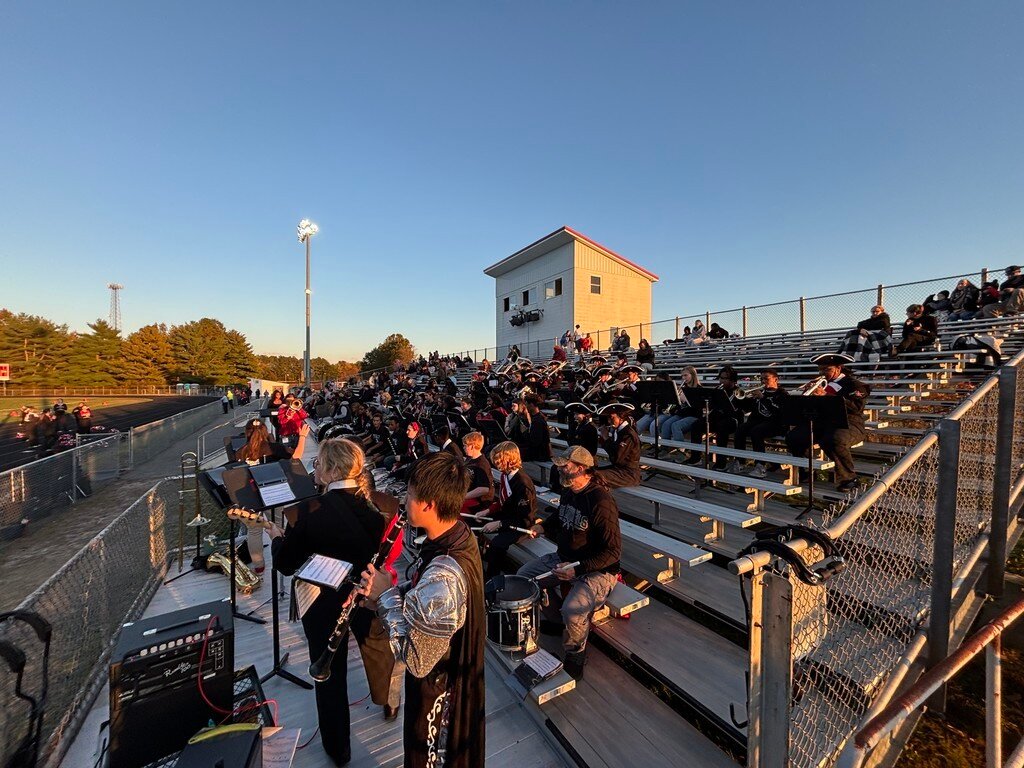
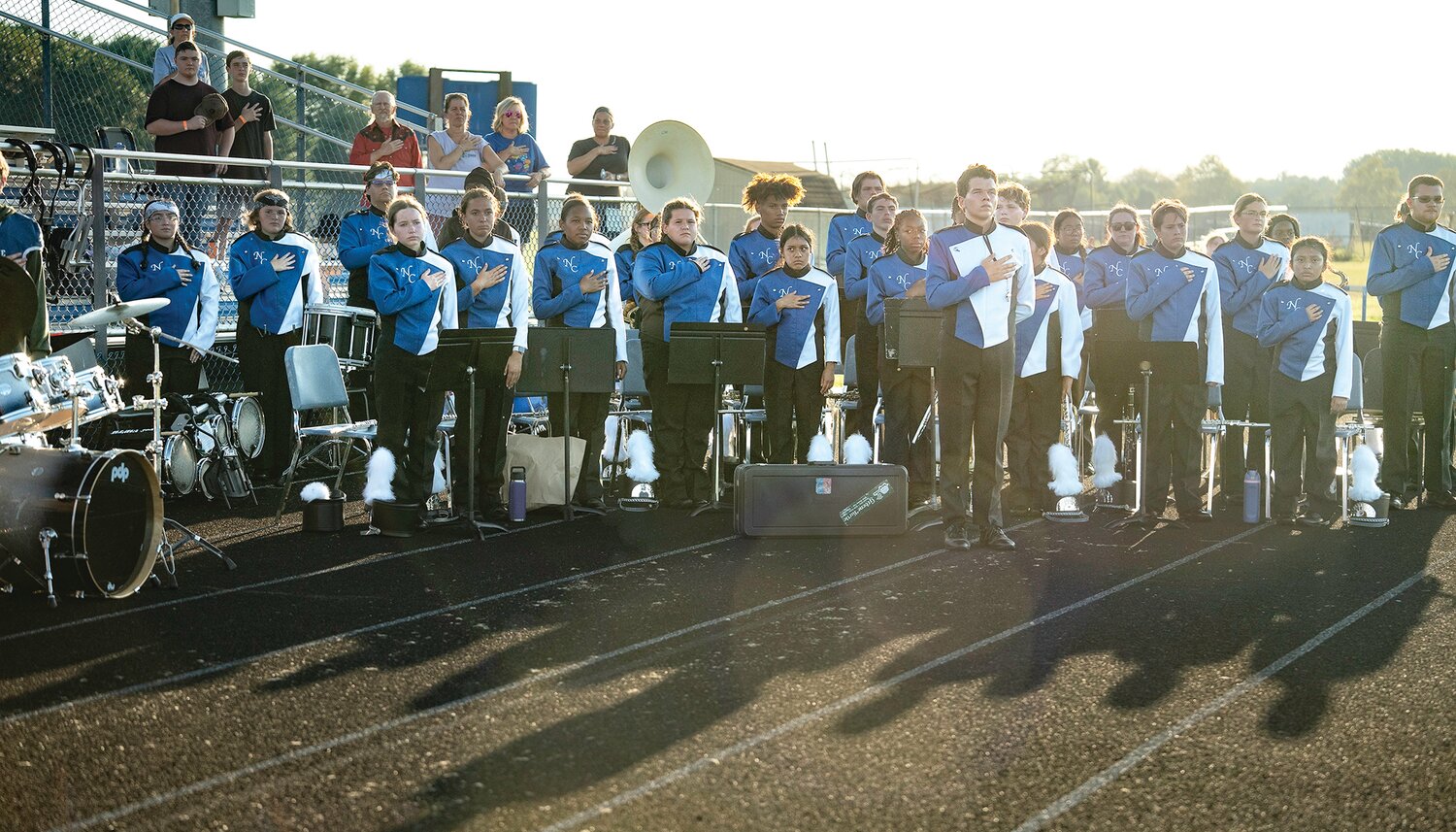
Caroline County’s two high school marching bands - North Caroline High School’s Band of Blue and Colonel Richardson High School’s Spirit of the Revolution - put in far more work than most realize. You may see them at football games, parades, and competitions, but what you don’t see are the long hours of preparation behind each performance.
Wayne Martin, director of the Band of Blue for 21 years, explained that the season starts long before the first home football game. Students attend a two-week band camp in August, rehearsing daily from 8 a.m. to 3 p.m. Once school begins, practices are typically held twice a week in the evenings, extending as long as 3:30 p.m. to 7 p.m.
“We started out this year with those [practices] being from 3:30 to 5:00,” Martin said, “But in October, since this has been really the busy season, we have extended a few of those to 7:00 [p.m.].”
At Colonel Richardson, director Thomas Cheezum spoke of how much effort goes into composing a halftime fieldshow on the part of the directors, “The first and most challenging aspect of developing a halftime (and competitive) field show is developing the idea of what you want to present, followed very closely by trying to figure out what you can afford to actually follow through with in the design,” he said, “Many fully packaged and purchased shows can cost tens of thousands of dollars. However, most of the shows we do are strung together on a bare-bones budget and then conceived, choreographed, charted out, taught, and perfected by me and my small staff.”
This level of commitment isn’t limited to the students and band directors. At North Caroline, the Band Association of Parents and Students (BAPS) provides essential behind-the-scenes support. President Danyelle Wallace described the organization as “an organization of students, parents, families, business, and community leaders who have a vested interest in the success of the band programs.” She said her main role as president is to work closely with Martin, the executive board, and the community to develop goals that best support the program. “I am so very fortunate to be a part of this current board,” she said. “They are the most dedicated, hardworking, in-it-for-all-the-right-reasons group I have ever been a part of.”
Both high schools’ programs maintain steady participation despite declining numbers in other areas. Colonel Richardson currently has 33 musicians and nine color guard members – a size that Cheezum said has remained consistent since the late 1980s. When concert band season begins, that number nearly doubles to around 60. Cheezum noted that while many large Eastern Shore bands have shrunk over time, his program has stayed strong or even grown. North Caroline’s Band of Blue has about 50 total members, which Martin said is slightly less than his pre-COVID average, but NCHS “has been able to maintain better than some programs have.”
Martin and Cheezum both believe the value of marching band is what it offers the students who participate. “The experiences that you can have through performing are experiences that you can't really get anywhere else…Band is unique because there's not just the educational aspect of it, but there's also that artistic and emotional level that you're not going to get anywhere else,” Martin said. Cheezum added that performing music while marching engages the entire brain, “There have been clinical studies using electroencephalograms that have shown brain activity far exceeding that of most other activities,” he explained, “This higher brain function is caused by the act of interpreting musical concepts, creating the music on their instruments, understanding mathematical concepts of geometric shapes—all while moving around a field that is abstractly cast as a grid in the performer’s head. This heightened brain activity literally makes students more intelligent and more capable in all other classrooms.”
For Wallace, the impact of band on students’ lives is positive but often underappreciated. While it’s true that the performers get to take advantage of the opportunities band offers, they also have to miss out on certain aspects of the high school experience. “We have to keep in mind that these kids will never sit in the student section at a football game, because they are playing, or ride their class float that they put so much time and effort into, because they are playing, or enjoy the pep rally, because they are playing,” she said. “They are doing what they love to do, and that is playing.” She also said that “Now, more than ever, we need to support music in education.”
As far as the long-held stereotype that band kids are outcasts and therefore completely disregarded by other students, Cheezum said that hasn’t been his experience at CRHS, “Students and coaches from most of the teams regularly come up to me and all my students to request music at their games, request new songs, and run ideas past us about how we can work together,” he said, “Recently, at our home competition, approximately 15 football players and cheerleaders came out together in an organized group to support our performance.”
But the increased opportunities in high school today for AP classes, Dual Enrollment, sports, and other extracurriculars can move band lower on the priority list. Martin said academic pressures and busy schedules sometimes make participation in marching band difficult, both for the students and for him as a director to be able to hold practices, “We are trying to accommodate students going to their sports practice and then coming after. And it's really just trying to juggle a whole bunch of different schedules and pull all these pieces together.” Cheezum also mentioned the constant struggle of getting the band together, “it is necessary for everyone involved to be present at all rehearsals and performances because there is no bench in Marching Band - whoever is there is who is performing,” he said.
Still, the rewards outweigh the challenges, “I love that my students learn and grow as musicians quickly,” Cheezum said, “We've had some exciting times and great performances that have grown out of their flexibility, versatility, and resilience. I get to make new music with them every day.”
So next time you’re enjoying the sights and sounds of the NCHS or CRHS marching bands, keep in mind that there’s a lot more to the music than meets the eye.